Isabella Stewart Gardner Museum
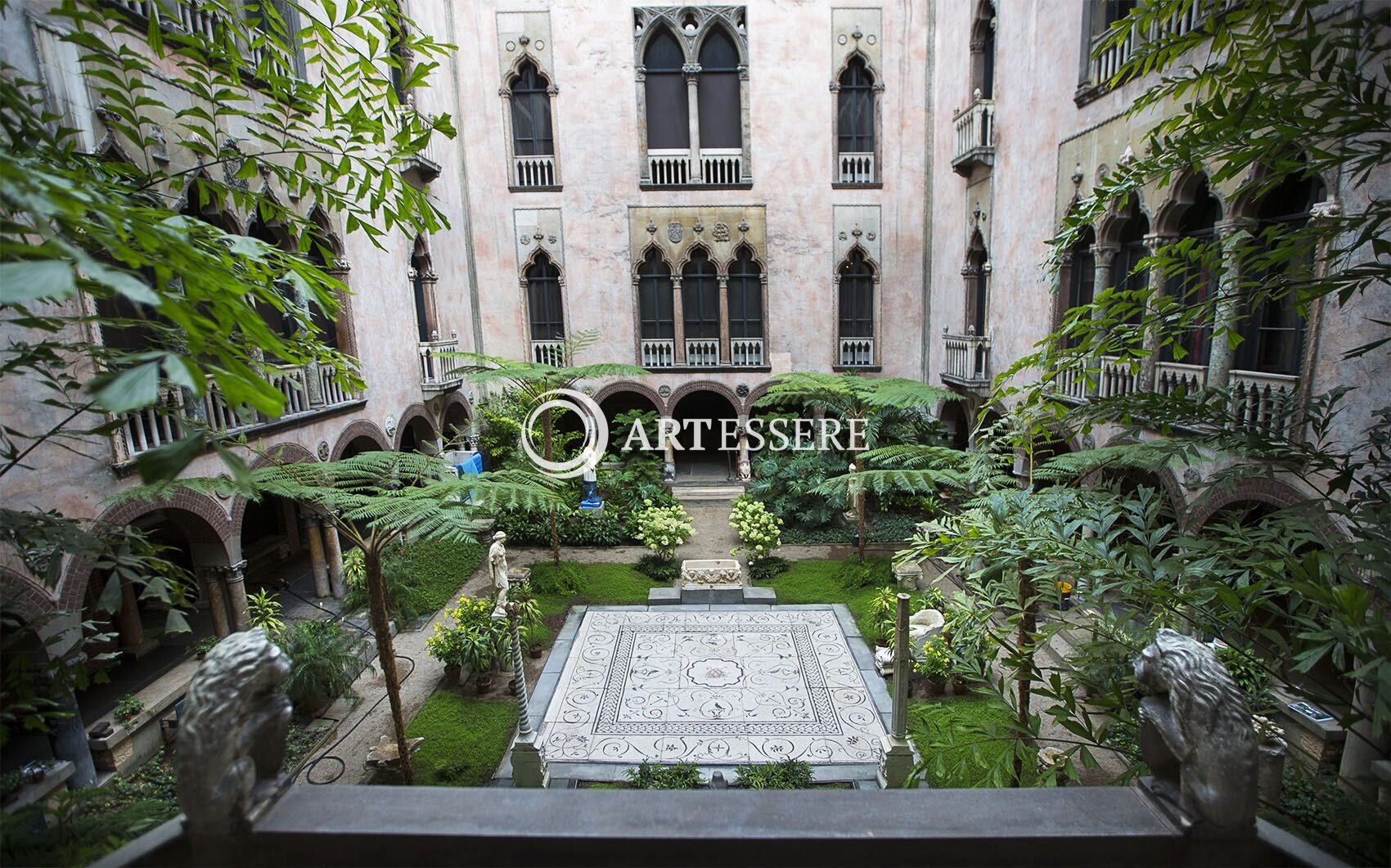
The Isabella Stewart Gardner Museum is an art museum in Boston, Massachusetts, which houses significant examples of European, Asian, and American art. Its collection includes paintings, sculpture, tapestries, and decorative arts. It is originally the home of Isabella Stewart Gardner, whose will called for her art collection be permanently exhibited "for the education and enjoyment of the public forever".
The home which houses today's museum was built in 1903 by Isabella Stewart Gardner (1840–1924), an American art collector, philanthropist, and patron of the arts. It is housed in a building designed to emulate a 15th-century Venetian palace, drawing particular inspiration from the Venetian Palazzo Barbaro.
Gardner collected and carefully displayed a collection of more than 7500 paintings, sculptures, furniture, textiles, silver, ceramics, 1500 rare books, and 7000 archival objects from ancient Rome, Medieval Europe, Renaissance Italy, Asia, the Islamic world, and 19th-century France and America. Among the artists represented in the galleries are Titian, Rembrandt, Michelangelo, Raphael, Botticelli, Manet, Degas, Whistler and Sargent. The first Matisse to enter an American collection is housed in the Yellow Room.
Well-known artworks in the museum's collection include Titian's The Rape of Europa, John Singer Sargent's El Jaleo and Portrait of Isabella Stewart Gardner, Fra Angelico's Death and Assumption of the Virgin, Rembrandt's Self-Portrait, Aged 23, Cellini's Bindo Altoviti, Piero della Francesca's Hercules, and Botticelli's The Story of Lucretia.
The archives hold more than 7,000 letters from 1,000 correspondents, including Henry Adams, T.S. Eliot, Sarah Bernhardt, and Oliver Wendell Holmes, in addition to travel albums, dealer receipts, and guest books.
The galleries also contain Gardner's little-known but extensive book collection that includes early-print editions and manuscripts of Dante, works by miniaturist Jean Bourdichon, incunables, and illuminated manuscripts.